- Новые боеприпасы значительно повышают эффективность стрельбы по малоразмерным БПЛА из штатного стрелкового оружия
https://rostec.ru/media/news/vysokotoch ... mi/#middle
Krieg in der Ukraine
-
theoderich
- Beiträge: 31638
- Registriert: So 29. Apr 2018, 18:13
Re: Krieg in der Ukraine
-
theoderich
- Beiträge: 31638
- Registriert: So 29. Apr 2018, 18:13
Re: Krieg in der Ukraine
Air Force advances standoff cruise missile program with live-fire testtheoderich hat geschrieben: ↑Mo 1. Sep 2025, 10:06 Rusty Dagger cruise missile at centre of possible USD825 million ERAM sale to Ukraine
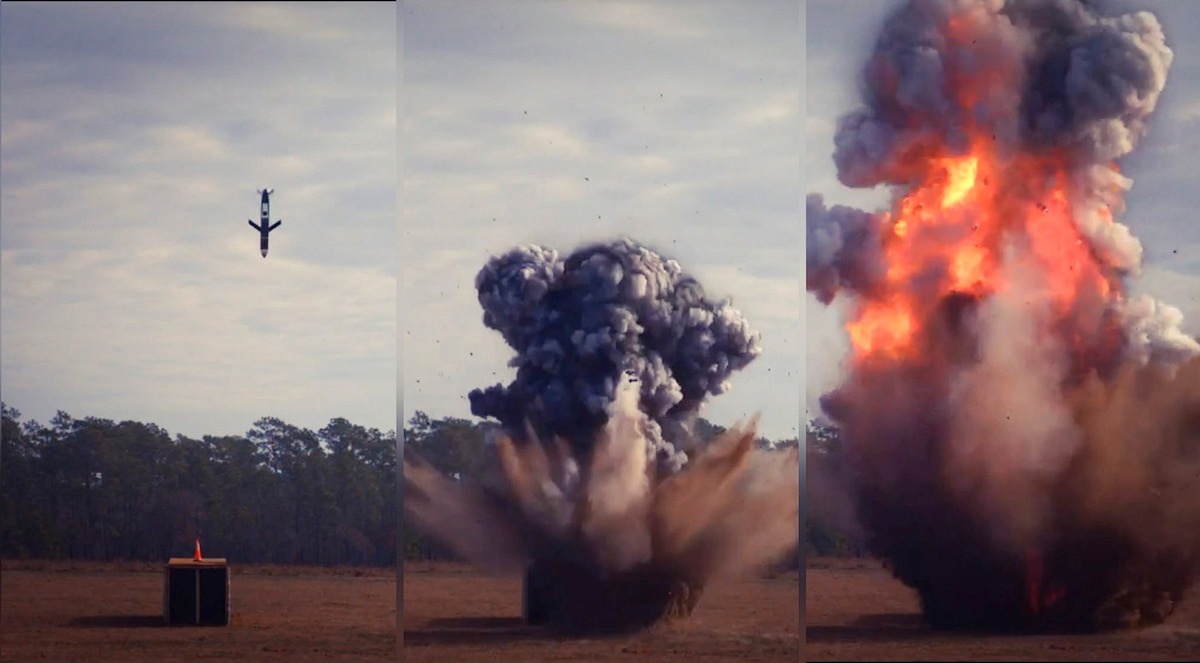
https://www.af.mil/News/Article-Display ... fire-test/The U.S. Air Force demonstrated a new benchmark, conducting a live-warhead test of a standoff cruise missile, known as Extended Range Attack Munition, on the Eglin Test and Training Range Jan. 21, less than 16 months from the program's initial contract award.
The event, which met all primary objectives including a full warhead detonation, gathered critical data to mature a new, cost-effective, long-range strike capability.
Arms Sales Notification
A Notice by the Defense Department on 01/27/2026
https://www.federalregister.gov/documen ... tification
Zuletzt geändert von theoderich am So 8. Feb 2026, 01:45, insgesamt 3-mal geändert.
-
theoderich
- Beiträge: 31638
- Registriert: So 29. Apr 2018, 18:13
Re: Krieg in der Ukraine
Versteckte Militärausgaben: Russland gibt deutlich mehr für Krieg und Militär aus, als es offiziell ausweist
https://www.bnd.bund.de/DE/Service/Publ ... us-sa.html
Sverige och Danmark upphandlar och donerar TRIDON Mk2 till Ukraina för 2,6 miljarder
https://se.linkedin.com/posts/bae-syste ... 87202-qO6_
https://www.bnd.bund.de/DE/Service/Publ ... us-sa.html
Sverige och Danmark upphandlar och donerar TRIDON Mk2 till Ukraina för 2,6 miljarder
https://se.linkedin.com/posts/bae-syste ... 87202-qO6_
Zuletzt geändert von theoderich am Sa 21. Feb 2026, 14:38, insgesamt 1-mal geändert.
-
theoderich
- Beiträge: 31638
- Registriert: So 29. Apr 2018, 18:13
Re: Krieg in der Ukraine
theoderich hat geschrieben: ↑Mo 22. Dez 2025, 19:10 Europäischer Rat, 18. Dezember 2025
https://www.consilium.europa.eu/de/meet ... 025/12/18/
- Schlussfolgerungen des Europäischen Rates, 18. Dezember 2025
https://www.consilium.europa.eu/media/p ... usions.pdf3. Der Europäische Rat kommt überein, der Ukraine ein Darlehen in Höhe von 90 Milliarden EUR für die Jahre 2026-2027 auf der Grundlage von EU-Anleihen auf den Kapitalmärkten zu gewähren, die durch den Handlungsspielraum des EU-Haushalts abgesichert sind. Im Wege der Verstärkten Zusammenarbeit (Artikel 20 EUV) in Bezug auf das auf Artikel 212 AEUV beruhende Instrument wird eine Mobilisierung von Mitteln aus dem Unionshaushalt als Garantie für dieses Darlehen keine Auswirkung auf die finanziellen Verpflichtungen der Tschechischen Republik, Ungarns und der Slowakei haben.
4. Im Einklang mit den Verträgen berührt dies nicht den besonderen Charakter der Sicherheits- und Verteidigungspolitik bestimmter Mitgliedstaaten und erfolgt unter Berücksichtigung der Sicherheits- und Verteidigungsinteressen aller Mitgliedstaaten.
5. Der in Dokument EUCO 26/25 enthaltene Wortlaut wurde von 25 Staats- und Regierungschefs nachdrücklich unterstützt.
-
theoderich
- Beiträge: 31638
- Registriert: So 29. Apr 2018, 18:13
Re: Krieg in der Ukraine
Russia Eyes Balloon Communications System To Fill Massive Gap Left After Losing Starlink
https://se.linkedin.com/posts/bae-syste ... 65152-W3NR
Russia is developing a new balloon-borne system that could provide battlefield access to high-speed data communications at a time when its forces are desperate to keep connected. The testing of the Barrage-1 balloon comes as Ukrainian troops are taking advantage of Russia’s loss of access to the SpaceX Starlink satellite constellation network. Both sides have become dependent on the SpaceX system for daily wartime operations, but the restrictions on Russia’s use of Starlink are allowing Kyiv’s forces to fend off attacks in some areas while advancing in others. You can read more about Russia’s Starlink troubles in our initial story here.
The Barrage-1 balloon recently underwent its first test flight, according to Russia’s Foundation for Advanced Studies (FFAS), which is developing the system. It “is designed to carry up to 100 kilograms (about 220 pounds) of payload at an altitude of up to 20 kilometers (about 12 miles),” FFAS recently announced on Telegram. One of the payloads being considered is “a promising 5G NTN terrestrial communication equipment, the testing of which is planned for the near future,” the organization claimed.
While not reaching anywhere near the low earth orbit (LEO) altitudes as the Starlink constellation – between 341 miles to 298 miles – Barrage-1 could still serve as an alternative access point for high-speed data transfer for troops on ground below.
Regardless of FFAS intentions, however, even if it is perfected, the Barrage-1 system will not provide the same level of coverage as Starlink, which is made up of thousands of laser datalink-connected satellites covering the globe. In contrast, Barrage-1 will be guided by “a pneumatic ballast system, which allows changing the flight altitude to utilize wind currents and move in the desired direction.”
“Due to this, the platform can maneuver and stay in a specified area or move along the trajectory required for the payload,” FFAS claimed, despite being in the very earliest stages of testing.
Even though it wouldn’t be a direct match to Starlink, at 12 miles high, it could provide wide-area connectivity similar to that offered by Starlink, albeit over a much more limited area. A mini ‘constellation’ of these systems spread over a region and mesh-networked together, could help solve the line of sight limitations of a single balloon.
Ukrainian Defense Ministry (MoD) advisor on defense technology and drone and electronic warfare (EW) expert Serhiy “Flash” Beskrestnov sees potential in this system.
“The platform is seen as an accessible and efficient alternative to expensive satellite constellations in LEO,” Beskrestnov explained on Telegram. “One of the priority tasks for ‘Barrage’ will be to test 5G NTN communication. Placing transmitters at an altitude of 20 km will allow providing high-speed internet and communication to vast territories where the construction of ground towers is impossible.”
“In theory and in practice, by controlling the altitude of an aerostat, it can be steered, not precisely, but enough to stay over any territory,” he added.
However, the Barrage-1’s comparatively low altitudes could make them targets for Ukrainian air defense systems and other countermeasures.
“And what’s most important for us? To have the means that can detect such objects over our territory,” Beskrestnov suggested. “And to have the ability to shoot down such targets if they pose a threat. As far as I remember, the S-300 [surface to air missile system] can engage targets at an altitude of 20-30 km (about 12 to 19 miles).”
Still, successfully targeting and engaging a balloon with a small radar signature using SAMs are two different things.
https://www.twz.com/news-features/russi ... g-starlinkCompounding problems created for Russia by the restrictions on Starlink, the launch of its own satellite constellation system has reportedly been delayed by about a year.
“The Russian aerospace company Bureau 1440 announced the postponement of its initial deployment of 16 high-speed internet satellites,” the SatNews media outlet recently reported. “Originally scheduled for late 2025, the launch of the first batch for the ‘Rassvet’ (Dawn) Low Earth Orbit (LEO) constellation has been rescheduled for 2026.”
Seen as a domestic alternative to Starlink, the program has been plagued by manufacturing shortfalls.
“While Roscosmos Chief Dmitry Bakanov stated in September 2025 that deployment of the first 300 satellites would begin by the end of that year, industry sources now indicate that the production line has failed to meet the necessary volume,” SatNews noted. “Despite the delay, Deputy Minister of Digital Development Dmitry Ugnivenko had claimed as recently as December 2025 that all 16 initial satellites were complete. Bureau 1440 currently has only six experimental satellites in orbit, launched during the Rassvet-1 and Rassvet-2 missions to test laser inter-satellite links and 5G signal compatibility.”
Even if it is launched, the Rassvet satellite constellation, which will take years to become operational, is very unlikely to have the same capabilities as Starlink.
https://se.linkedin.com/posts/bae-syste ... 65152-W3NR
Re: Krieg in der Ukraine
Heute jährt sich der Überfall auf die Ukraine zum vierten Mal. Die blutige Bilanz dieser vier Jahre:
[Sofern nicht gesondert angegeben, dienen hier 'Mediazona' und 'Oryx' als Quellen]
Menschliche Verluste an Kombattanten
Ukraine
Gefallen (Minimum): 55.000 (Quelle)
Gefallen (Maximum): 86.142
Verwundet (Minimum): keine Angabe möglich*
Verwundet (Maximum): keine Angabe möglich*
Vermisst (Minimum): 89.324
Vermisst (Maximum): keine Angabe möglich*
Russland
Gefallen (Minimum): 177.433
Gefallen (Maximum): etwa 219.000
Verwundet (Minimum): keine Angabe möglich*
Verwundet (Maximum): keine Angabe möglich*
Vermisst (Minimum): etwa 90.000
Vermisst (Maximum): 177.108
*) Gesamtverluste laut CSIS, einschließlich Verwundete: 2 Mio. Kombattanten (Quelle)
Menschliche Verluste an Zivilisten
Ukraine (Quelle)
Getötet (Minimum): 14.999
Getötet (Maximum): "bis zu 100.000", unter der Annahme, dass alle vermissten Zivilpersonen tot wären
Verwundet (Minimum): 40.601
Verwundet (Maximum): keine Angabe möglich
Russland (Quelle)
Getötet (Minimum): 394
Getötet (Maximum): keine Angabe möglich
Verwundet (Minimum): keine Angabe möglich
Verwundet (Maximum): keine Angabe möglich
Bildlich bestätigte Verluste an Kriegsmaterial (Russland)
Landsysteme
Kampfpanzer: 4.341
Schützenpanzer: 6.380
Transportpanzer: 722
Gepanzerte Gefechtsfahrzeuge (übrige): 2.388
Geschützte Infanteriefahrzeuge: 477
Führungs- und Fernmeldefahrzeuge: 315
Pioniergerät: 714
Gezogene Artillerie: 549
Selbstfahrlafetten: 998
Raketenartillerie: 557
Flakpanzer: 28
Flugabwehrraketensysteme: 383
Radargeräte: 117
Lkw, Geländewagen, Kleinbusse etc.: 4.539
Unbemannte Bodenfahrzeuge: 65
Flugzeuge und Hubschrauber
Jagdflugzeuge, Jagdbomber, Mehrzweckkampfflugzeuge: 139
Strategische Bomber: 21
Transportflugzeuge: 14
Funktionsflugzeuge, insb. Frühwarnflugzeuge: 7
Kampf- und bewaffnete Transporthubschrauber: 166
Transporthubschrauber (Mi-26): 2
Aufklärungsdrohnen: 762
Kampfdrohnen (nur Mehrweg): 21
Seestreitkräfte
Lenkwaffenkreuzer: 1
Korvetten: 3
U-Boote: 2
Übrige (insb. Landungsschiffe und Patrouillenboote): 24
Bildlich bestätigte Materialverluste (Ukraine)
Landsysteme:
Kampfpanzer: 1.389
Schützenpanzer: 1.546
Transportpanzer: 1.291
Gepanzerte Gefechtsfahrzeuge (übrige): 510
Geschützte Infanteriefahrzeuge: 2.434
Führungs- und Fernmeldefahrzeuge: 87
Pioniergerät: 272
Gezogene Artillerie: 261
Selbstfahrlafetten: 791
Raketenartillerie: 104
Flakpanzer: 48
Flugabwehrraketensysteme: 178
Radargeräte: 144
Lkw, Geländewagen, Kleinbusse etc.: 1.330
Unbemannte Bodenfahrzeuge: 188
Flugzeuge und Hubschrauber:
Jagdflugzeuge, Jagdbomber, Mehrzweckkampfflugzeuge: 109
Transportflugzeuge: 4
Kampf- und bewaffnete Transporthubschrauber: 54
Transporthubschrauber: 1
Aufklärungsdrohnen: 558
Kampfdrohnen (nur Mehrweg): 29
Seestreitkräfte:
Fregatte: 1
Übrige (insb. Landungsschiffe und Patrouillenboote): 41
2025 war das bislang blutigste Jahr des Krieges. Der oben verlinkten Analyse des Centers for Strategic and International Studies zufolge beträgt der monatliche Blutzoll seit August im Mittel 40.000 Gefallene.
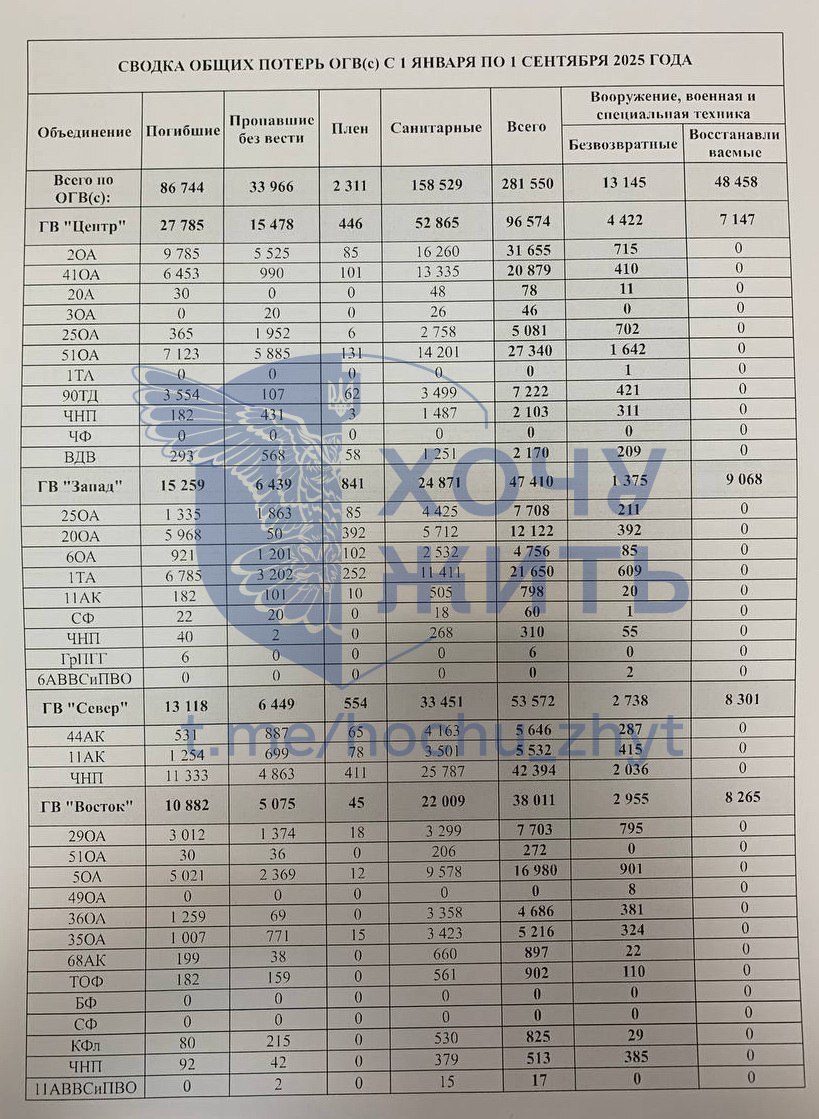
Leaks belegen, dass die Russische Föderation allein in den ersten neun Monaten Verluste in Höhe von 281.550 Soldaten erlitten hat, davon 86.744 gefallen, 33.966 vermisst, 2.311 in Kriegsgefangenschaft. (Quelle 1, Quelle 2)
Das CSIS wertet den Ukraine-Krieg als verlustreichsten zwischenstaatlichen Konflikt seit Ende des Zweiten Weltkriegs. Keine Großmacht hat seit 1945 größere militärische Verluste erlitten als Russland. In keinem Krieg seit dem Ersten Weltkrieg hat eine Armee geringere tägliche Geländegewinne verzeichnen können als Russland (im Mittel 15 m pro Tag).
[Sofern nicht gesondert angegeben, dienen hier 'Mediazona' und 'Oryx' als Quellen]
Menschliche Verluste an Kombattanten
Ukraine
Gefallen (Minimum): 55.000 (Quelle)
Gefallen (Maximum): 86.142
Verwundet (Minimum): keine Angabe möglich*
Verwundet (Maximum): keine Angabe möglich*
Vermisst (Minimum): 89.324
Vermisst (Maximum): keine Angabe möglich*
Russland
Gefallen (Minimum): 177.433
Gefallen (Maximum): etwa 219.000
Verwundet (Minimum): keine Angabe möglich*
Verwundet (Maximum): keine Angabe möglich*
Vermisst (Minimum): etwa 90.000
Vermisst (Maximum): 177.108
*) Gesamtverluste laut CSIS, einschließlich Verwundete: 2 Mio. Kombattanten (Quelle)
Menschliche Verluste an Zivilisten
Ukraine (Quelle)
Getötet (Minimum): 14.999
Getötet (Maximum): "bis zu 100.000", unter der Annahme, dass alle vermissten Zivilpersonen tot wären
Verwundet (Minimum): 40.601
Verwundet (Maximum): keine Angabe möglich
Russland (Quelle)
Getötet (Minimum): 394
Getötet (Maximum): keine Angabe möglich
Verwundet (Minimum): keine Angabe möglich
Verwundet (Maximum): keine Angabe möglich
Bildlich bestätigte Verluste an Kriegsmaterial (Russland)
Landsysteme
Kampfpanzer: 4.341
Schützenpanzer: 6.380
Transportpanzer: 722
Gepanzerte Gefechtsfahrzeuge (übrige): 2.388
Geschützte Infanteriefahrzeuge: 477
Führungs- und Fernmeldefahrzeuge: 315
Pioniergerät: 714
Gezogene Artillerie: 549
Selbstfahrlafetten: 998
Raketenartillerie: 557
Flakpanzer: 28
Flugabwehrraketensysteme: 383
Radargeräte: 117
Lkw, Geländewagen, Kleinbusse etc.: 4.539
Unbemannte Bodenfahrzeuge: 65
Flugzeuge und Hubschrauber
Jagdflugzeuge, Jagdbomber, Mehrzweckkampfflugzeuge: 139
Strategische Bomber: 21
Transportflugzeuge: 14
Funktionsflugzeuge, insb. Frühwarnflugzeuge: 7
Kampf- und bewaffnete Transporthubschrauber: 166
Transporthubschrauber (Mi-26): 2
Aufklärungsdrohnen: 762
Kampfdrohnen (nur Mehrweg): 21
Seestreitkräfte
Lenkwaffenkreuzer: 1
Korvetten: 3
U-Boote: 2
Übrige (insb. Landungsschiffe und Patrouillenboote): 24
Bildlich bestätigte Materialverluste (Ukraine)
Landsysteme:
Kampfpanzer: 1.389
Schützenpanzer: 1.546
Transportpanzer: 1.291
Gepanzerte Gefechtsfahrzeuge (übrige): 510
Geschützte Infanteriefahrzeuge: 2.434
Führungs- und Fernmeldefahrzeuge: 87
Pioniergerät: 272
Gezogene Artillerie: 261
Selbstfahrlafetten: 791
Raketenartillerie: 104
Flakpanzer: 48
Flugabwehrraketensysteme: 178
Radargeräte: 144
Lkw, Geländewagen, Kleinbusse etc.: 1.330
Unbemannte Bodenfahrzeuge: 188
Flugzeuge und Hubschrauber:
Jagdflugzeuge, Jagdbomber, Mehrzweckkampfflugzeuge: 109
Transportflugzeuge: 4
Kampf- und bewaffnete Transporthubschrauber: 54
Transporthubschrauber: 1
Aufklärungsdrohnen: 558
Kampfdrohnen (nur Mehrweg): 29
Seestreitkräfte:
Fregatte: 1
Übrige (insb. Landungsschiffe und Patrouillenboote): 41
2025 war das bislang blutigste Jahr des Krieges. Der oben verlinkten Analyse des Centers for Strategic and International Studies zufolge beträgt der monatliche Blutzoll seit August im Mittel 40.000 Gefallene.
Leaks belegen, dass die Russische Föderation allein in den ersten neun Monaten Verluste in Höhe von 281.550 Soldaten erlitten hat, davon 86.744 gefallen, 33.966 vermisst, 2.311 in Kriegsgefangenschaft. (Quelle 1, Quelle 2)
Das CSIS wertet den Ukraine-Krieg als verlustreichsten zwischenstaatlichen Konflikt seit Ende des Zweiten Weltkriegs. Keine Großmacht hat seit 1945 größere militärische Verluste erlitten als Russland. In keinem Krieg seit dem Ersten Weltkrieg hat eine Armee geringere tägliche Geländegewinne verzeichnen können als Russland (im Mittel 15 m pro Tag).
-
theoderich
- Beiträge: 31638
- Registriert: So 29. Apr 2018, 18:13
Re: Krieg in der Ukraine


Zuletzt geändert von theoderich am Sa 18. Apr 2026, 21:07, insgesamt 1-mal geändert.